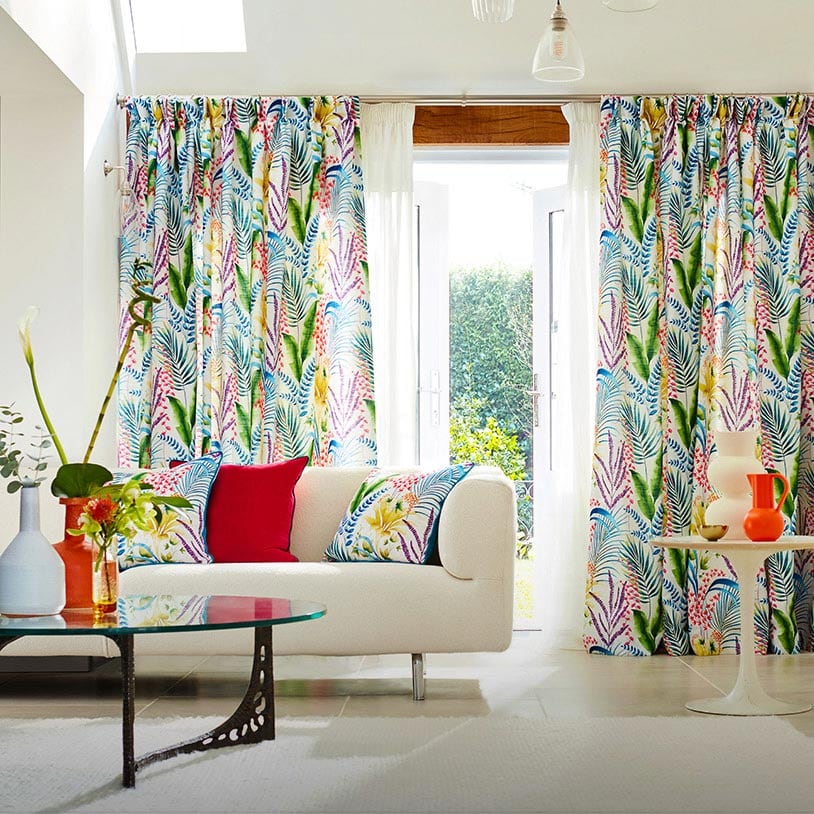
20 Handy Suggestions for Finding Dress Fabric in Birmingham, Walsall and Lichfield
What Should You Do If Don't Have An Arrow? How Do You Choose The Perfect Fabric For Curtains & DressesIt's an act of imagination to select fabrics per yard. A piece of flat fabric is transformed from a static object to something that flies whether it's the elegant drape or the fluid silhouette of a dress. The path from the fabric bolt to its final form can be fraught with pitfalls due to the fact that the requirements of windows and wearables are quite different. This guide moves beyond basic fibre content to explore the intricate, often neglected factors that distinguish the successful design from a disappointing one. The West Midlands shopping scene, as well the tactile science that regulates the fabric's behaviour will be explored. You'll also learn about the crucial conversations you need to have with your material and maker. Understanding the different layers of fabric can help you choose the right lengths for the purpose you want to use them.
Detailed Top 10 Things to Know:
1. The Drape Dichotomy. Curtains need Architecture. Dresses Need Kinetics.
The primary difference is the need for movement. Curtain fabric needs to be able to remember the architecture; it should fold in smooth and steady folds like a heavy fabric like linen or wool that is structured. It must also keep its shape in spite of gravity. Fabrics for dresses must exhibit "kinetic beauty" They must move with your body. They should be able to recover from stretching and shrinkage without wrinkling. Do not just rub the fabric in a fabric store, but rather crunch it in your palm for about 10 seconds. Fabrics that are good for curtains will keep the crumple in place However, a great fabric for dresses will prevent the crumple by reversing quickly.
2. How your fabric meters will be illuminated.
This is by far the most intimate and critical test. Do not buy curtain fabric in meters without examining the sample on your actual window. Be aware of how sunlight in the morning alters the colour of the fabric as midday light illuminates the weave's real texture and what it appears like in evening artificial light. The dress fabric can be hung under a fluorescent light source or outside, if you can. Colors that appear vibrant in the shop can appear dull and drab under daylight.
3. The Selvedge Decoderring: Uncovering Hidden Fabric Intelligence
The edge that is tightly weaved is referred to as"a "data strip". In the case of curtain or upholstery fabric selvedges is branded with the brand's name, collection as well important certificates like fire retardancy (look at BS5867-2). Dress fabric selvedges are a clear indication of milling techniques. A dense, smooth edge suggests top-quality fabric, whereas rough, ragged edges could indicate a less stable or a more rustic fabric. An assistant in the Lichfield store will be able to read the selvedge and explain the reason for it.
4. The Shrinkage Sovereignty.
This is the unglamorous foundation of professional outcomes. It is essential to wash and dry any dress fabric bought by the metre with the exception of silks and wools that require dry cleaning. This "sanctifies" the metre, or makes the metre sacred and permits shrinkage to occur before a cut is made. For curtains, the process differs: you must include professional cleaning methods. Ask your curtain maker to build in "fullness" and header allowances for future minimum shrinkage.
5. The Pattern Match Calculus The Secret Metreage Multiplier.
A stunning patterned fabric can double your required metreage if ignored. You must make use of the repeat pattern, and not just the length, when calculating for curtains and dresses. For custom-made curtains, the panels for curtains should be cut to fit the pattern horizontally once the panels are shut. This will waste fabric every drop. For a dress, placing a large floral motif centrally across the bodice requires careful cutting, which can take up one metre. Birmingham's trade shops can do the math for you. smaller Walsall shops may think you already know the formula.
6. Curtain Fabric to act as an environmental mediator Acoustic & thermal layer.
It is environmentally responsible to select curtains on a per metre basis. The heavy velvets and triple-weave wools serve as thermal mass, shielding against cold and heat, and as acoustic dampeners that soften the echo of a room. A light-weight voile is merely a light diffuser. For dresses this layer is not significant, since it's focused on the individual microclimate (breathability or wicking). Be sure to inquire whether the fabric has "thermal density" or "acoustic mass" when shopping in Birmingham's upholstery fabric warehouses. These terms are understood for theatre and hotel work but can be applied to an Victorian bay window, which has a draft.
7. The Local Shop Specialism Spectrum: Where to Find Which Fabric Intelligence.
Your area of residence in the West Midlands should guide your search. If you're seeking a more complex dressmaking fabric (silks or technical jerseys), look to Lichfield independents. The staff may be garment makers themselves. Birmingham's warehouses and markets are geared towards trade, so they offer technical specifications and weights for large curtains and upholstery fabrics. Walsall has a broad selection of shops that sell domestic items at a good price and also simple cotton dress fabrics. If you're looking for delicate silk in the Walsall discount store or upholstery velvet in a Lichfield boutique that is focused on dresses, it is likely that it won't be available.
8. The "Railroading Revelation: A curtain maker's secrets to a seamless wide.
The old technique of joining panels vertically creates visible seams on large windows. The most modern option is "railroading": using fabric with the pattern running parallel to the selvedge, permitting you to cut the length of the curtain from the fabric's width. This creates a single seamless drop up to the length of the fabric (often about 3m). Some patterns are not designed for railroading. In the Birmingham showroom, you must always ask: "Can that be railroaded?" This will eliminate vertical seams however, it requires greater accuracy in the production.
9. The Handle Versus Drape Paradox in Dress Fabric.
"Handle" The feel of your hands as you work the fabric, and "drape" in the way it stretches under your own weight. The two are different. The taffeta-like drape is strong and architectural and has a lively handle. A heavy silk charmeuse has an edgy handle, but an enveloping, liquid drape. You can request to see the material draped on a table, or perhaps your arm. Fabrics are beautiful to handle (good handle), but not fall well (bad drape). Birmingham market stands that refuse to let bolts unwind are hazardous for making dresses.
10. The Maker's Codicil: Your first conversation before you buy an ounce of meter
Begin a conversation with the manufacturer you intend to purchase fabric for a project that is important. A curtainmaker will provide advice regarding fullness rates (typically between 2x and 2.5x the rail's width) and lining compatibility (which can affect cut length), and header styles (which impact cut length). Dressmakers will also discuss pattern compatibility with ease requirements, seam finishes. An appointment with a Walsall-based curtain shop or a Lichfield seamstress based in Lichfield will make sure that the gorgeous metres you buy will be transformed through their methods and tools. It transforms a purchase into the very first step in a collaborative creation. See the recommended custom made curtains for more examples including hole in the wall curtains walsall, curtain shop, curtain fabric online, curtain tracks, curtains buy, curtain poles uk, curtains and tracks, window blinds with fabric, curtains with blinds, window blinds with fabric and more.
Calculating What You Require To Make Diy Curtains & Upholstery
The transition from admiring an item by the metre to deciding on the exact quantity required for a project that you can DIY is where many of the creative projects falter. The twin spectres are insufficient and waste. This can lead to over-ordering, or even a project being stopped in mid-air. This guide dissects curtains and upholstery, by going beyond the standard length-and-width formulas, and incorporating additional variables such as fabric pile and pattern. Crucially, it connects this maths to the practical requirements of purchasing from different kinds of fabric shops throughout the West Midlands, acknowledging that where you buy directly influences the way you calculate. Once you master these principles, you will go from being a cautious buyer to becoming a confident and exact buyer.
Please read the below Top 10 Things You must know.
1. The "Fullness Factor" A flimsy notion. Why You Should Double (Not match) The Width of Your Rail.
The most frequently made DIY mistake is to purchase curtains that do not match the exact width of your track or curtain pole. This can result in flat, thin curtains. Curtains that are made to measure professionally use "fullness factors" that are between 2-to-2,5 times the width of the rail. The fabric that is left over is pleated into beautiful folds which stop light. The first step is to calculate *Rail Width + 2.5 = Total Fabric Width. ** For a 20cm rail you'll require 500cm of fabric width (5 metres) prior to considering repeat patterns. It is imperative to know that this cannot be negotiated if you want an expert design.
2. The Tax on Pattern Repeating Hidden Multiplier which determines your Meterage
When you've chosen a patterned cloth the calculations you make will shift from simple math to strategic. Divide the vertical repeat by. Find this measurement on the label of the fabric or by measuring from one distinct point in the pattern until the point that is directly below. The formula is: **[(Finished Measurement + Hem and heading Allowance (+ Pattern Repeat) = Repetition Number required. Round this number and then divide it by the Pattern Repeat in order to find your **Cut length per drop**. A 250cm length using a 64cm repeat requires 3.9 repeats, which is rounded up to 4, which means 4 x 64cm = 256cm cut length. This "waste" that is essential for alignment of patterns, must be left.
3. Purchase width in addition to length The "Railroading Revelation" for upholstery with wide widths.
The traditional method of cutting fabric (where the pattern runs the length of the fabric) could result in wasteful seams for large projects, such as a couch seat or wide headboard. The solution is "railroading" which is based on the fabric's width as the length of your project. If the fabric is 137cm, but your sofa measures 220cm then you will join two lengths. If the pattern allows it (ask in the store! You can cut a 220cm length of fabric from its *width*, if the fabric is long enough to fit on the bolt. This will require a longer initial length from the bolt but produces an unidirectional piece. Birmingham's counters make this quickly; Walsall shops might need to explain the concept.
4. The Dressmaker's way of making curtains: Why you should respect the fabric's "grain."
Like in dressmaking - cutting curtains "on the grains" is essential. To ensure a straight curtain, the warp threads of the fabric (running parallel to the selvedges) must be vertical. Be aware of the fact that certain fabrics, such as florals or velvet that are designed in a particular manner, have the characteristic of having a "nap". It is essential to cut every drop facing in the same manner, because it could lead to the creation of waste. If you are in the Lichfield fabric stores that specialize in dresses, letting them know that you want to "cut straight grain for drapery" will instantly connect you to the knowledge of these stores that understand the integrity of grainlines much better than common furniture stores.
5. The Lichfield Loophole, Using Dress Fabric as curtains with its Calculation Quirk.
The size of the dress (e.g. linen or heavy brocade) bought from the Lichfield Boutique is restricted. Fabrics for dresses are typically 110cm-150cm, whereas standard curtains are 137cm-175cm. If you wish to reach the required **Total Material Wide*from the first point, then you will have to increase the number of panels. This can affect the seam allowance and matching of patterns. The formula is: **Total Width Requirement / Bolt Width of Fabric = The Number Of Panels. ** Round up. Multiplying your number by **Cut-Length** will give you your final meters. It often results in needing more metreage than with a larger fabric, but this is usually compensated by the uniqueness of the fabric.
6. The "Upholstery Fabric By the Metre" puzzle: Accounting for Cushion Buttoning and Boxing.
Calculating the dimensions of a cushion or back for upholstery is very simple: width + sew allowance divided by length and seam allowance. The complexity comes with deep buttoning and boxing, which are the edges of the cushion. For boxing, you need to measure the perimeter of the cushion and add seam allowance. This will be the length of your boxing strip. For deep-buttoned backs you may need up to twice the flat area to accommodate the fabric drawn into the tufts. Shops in Birmingham that specialize in upholstery fabrics will have "yield guide" or consultants who can aid you in calculating the quantity of fabric you need to cover your furniture.
7. Walsall's Value Engine: Sourcing linings and calico mock-ups first.
Prior to cutting your costly main fabric, you should make an "toile" or mock-up of inexpensive calico. Walsall fabric shops have a great collection of this inexpensive but essential muslin. Calculate the calico you require and then buy it, by using the same formulas you utilized to determine the final piece. This dry run reveals any errors in measurements and permits you to review your completeness of calculations and fine tune your sewing technique without putting yourself at risk. Walsall is an excellent spot to find all your linings and interlinings for the best price. Consider it an additional, useful layer of analysis prior to investing in the face fabric.
8. The Selvedge & Shrinkage allowance: the Unseen centimetres are important.
Each calculation should include "invisible" allowances. Seams are added 2cm (so 4cm is added to the width of each panel when there are seams on the sides). Curtain hems are usually a 15cm deep bottom hem, and 10cm at the top. If you don't wash the material (e.g. linen or cotton) and you want to you should add 5-8 percent for shrinkage. This means you should add 12.5cm to a 250cm length. When asking an establishment to cut fabric per millimetre, provide them with your cut length (including all allowances) not your "finished" length*.
9. The Birmingham Bulk Buy Buffer - The Strategic "Safety Metre."
To ensure that you don't have to repeat a dye lot in the event you purchase from Birmingham markets or trade rolls, where it's often difficult to get an exact match, use the "safety metre". Once you have finished your calculation, add the length of one repeat (or 0.5m when it's plain) to your purchase. This covers any errors in cutting, threading, or future repair. This is a relatively inexpensive insurance against disaster. This buffer will be less significant in Lichfield because a boutique is capable of ordering a specific cloth or plain material from Walsall.
10. Layout on floor or paper Final Pre-Cut Check.
Perform a final check prior to having the fabric cut in the shop or sheared. Tape the bolt width on graph paper or your floor. Then, you can lay out each section using a ruler. Keep in mind the repeated patterns and the nap direction. This "paper doll" exercise often reveals one last optimisation--perhaps re-ordering drops can save half a repeat. It's a last and contemplative action that could be the difference between a DIYer suffering from anxiety from one who is confident.